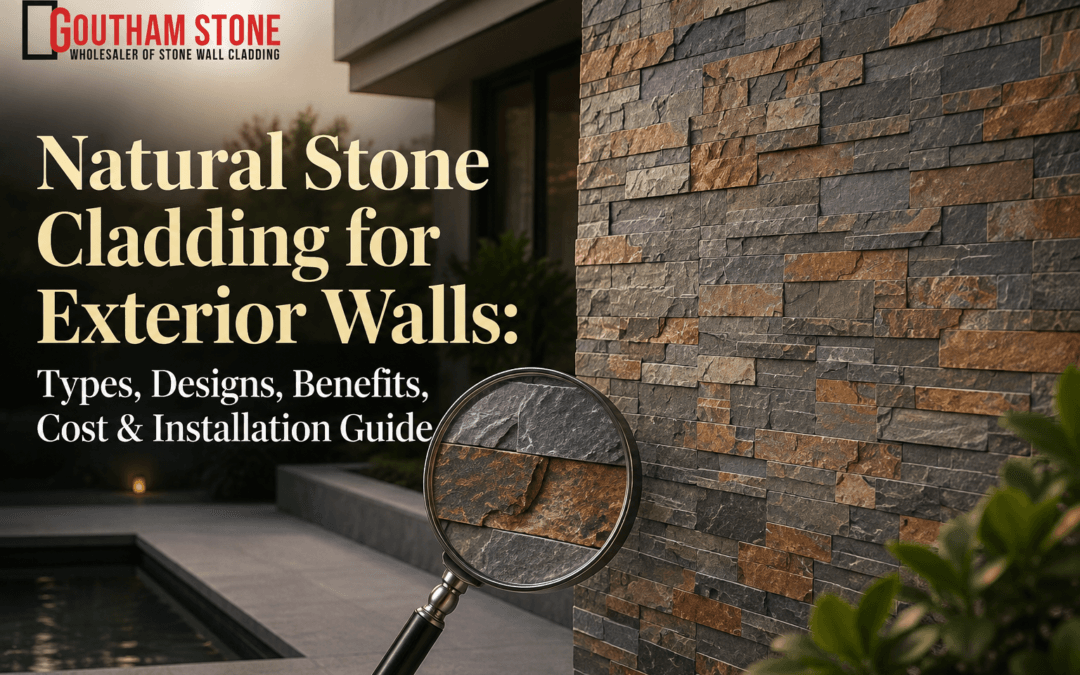
The exterior wall of a home does more than protect the building. It also creates the first visual impression. Natural stone cladding gives exterior walls a combination of genuine texture, colour variation and architectural depth that is difficult to reproduce with flat paint or printed finishes. It is commonly used on house elevations, villas, entrance walls, compound walls, porches and commercial facades.
The right stone, however, depends on the application. Stone type, finish, thickness, wall condition, local climate, installation method and budget all matter. This guide explains the main types of natural stone used for exterior walls, popular design applications, cost factors, installation basics and what to check before buying natural stone cladding.
What Is Natural Stone Cladding?
Natural stone cladding is a non-structural stone finish fixed to a wall surface to provide protection and a decorative exterior or interior finish. Unlike structural stone masonry, cladding generally does not form the main load-bearing structure of the building.
It can be used on concrete, masonry and other suitable wall surfaces, depending on the fixing system and project requirements. Indian guidance for external stone facing highlights the importance of proper wall preparation, suitable fixing techniques and weather-resistant construction.
Common applications include:
- House and villa elevations
- Entrance and porch walls
- Boundary and compound walls
- Garden walls
- Balcony walls
- Commercial building facades
- Living room feature walls
- TV and staircase walls
Why Choose Natural Stone Cladding for Exterior Walls?
The biggest attraction is the material itself. Natural stone has natural variations in colour, grain and texture, so the finished wall does not have the uniform appearance of a manufactured printed surface.
For exterior applications, stone can also provide a durable finish when the material is correctly selected and installed for the specific exposure conditions. Stone selection should consider properties such as strength, density, hardness and water absorption, particularly where the wall is exposed to rain and changing weather.
Other advantages include:
- Natural appearance: Every piece has its own character.
- Texture and depth: Rough, split or layered finishes can add architectural interest.
- Design flexibility: Stones are available in different colours, sizes, patterns and finishes.
- Premium visual appeal: Stone can make an otherwise plain elevation look more substantial.
- Long-term usability: Properly selected and installed stone can serve for many years.
- Reasonable maintenance: Most applications need routine cleaning, with additional treatment depending on the stone and exposure.
Natural stone is not completely maintenance-free. Porous stones, exposed walls and certain finishes may require sealing or periodic care.
Types of Natural Stone Used for Wall Cladding
Sandstone
Sandstone is a popular option for exterior elevations because of its warm, earthy appearance. Beige, brown, rust and other natural tones can work well with both traditional and contemporary architecture.
It is commonly considered for villa elevations, compound walls, garden features and entrance areas. The specific suitability of a sandstone product should still be checked for the intended outdoor exposure.
Slate
Slate is known for its darker tones and naturally layered appearance. Grey, charcoal, black and earthy shades can create a strong contemporary look.
It works particularly well for modern facades, entrance features and interior accent walls. The finish and fixing system should be selected according to whether the stone is being used indoors or outdoors.
Quartzite
Quartzite is a harder natural stone category often selected for premium applications where durability and surface performance are important.
Its natural variation can work particularly well on feature elevations and high-visibility architectural surfaces. Because different stones and finishes have different properties, buyers should inspect the actual product rather than choosing only by name.
Limestone
Limestone offers a softer and more understated appearance. Its neutral colours can suit contemporary homes, traditional architecture and commercial buildings.
Because limestone characteristics vary between products, check water absorption, finish and recommended application before using it on a highly exposed exterior wall.
Granite
Granite is valued for its hardness and durability. It can be used for premium exterior features, commercial applications, entrances and selected facade areas.
BIS materials information lists granite among building stones and identifies properties such as strength, density, hardness and water absorption as important considerations when selecting stone.
Other Natural Stone Options
Depending on the supplier and project, you may also come across stacked stone, elevation stones, stone panels and specialised carved or CNC-cut natural stone designs.
For decorative applications, CNC stone murals can turn a wall into a feature rather than simply covering it with a uniform finish.
Popular Natural Stone Cladding Designs for Indian Homes
Stone can be used in many different parts of a building. The design should complement the architecture instead of covering every available surface.
Front Elevation
A stone-clad section on the front elevation can create a strong focal point. Combining stone with plaster, glass, wood-look elements or concrete can prevent the facade from looking too heavy.
Villa Exterior
Large villas give more room for experimenting with texture. A darker slate or quartzite-style finish can create a modern appearance, while warm sandstone can suit more traditional designs.
Entrance and Porch
The entrance is a natural place for a statement stone wall. A textured finish around the main door can create depth without requiring the entire elevation to be clad.
Boundary and Compound Walls
Stone works particularly well on selected sections of compound walls. Instead of cladding the entire boundary, homeowners can use stone as a visual feature between plastered or painted sections.
Balcony and Garden Walls
Smaller areas such as balcony backdrops, planter walls and garden features can benefit from natural texture without requiring a large material budget.
Living Room and TV Walls
Although this guide focuses on exteriors, the same material can be used indoors. Slate, stacked stone and decorative panels can create feature walls in living rooms, staircases and entertainment areas.
Commercial Facades
Offices, showrooms, hospitality spaces and other commercial buildings can use stone selectively around entrances, reception areas and facade sections to create a more distinctive architectural identity.
For decorative stone applications, Goutham Stone also offers CNC mural stone designs. Its existing website content describes ready-stock designs and CNC mural options for homeowners, architects, builders and interior designers across Tamil Nadu.
Natural Stone Cladding Cost in India
There is no single nationwide stone cladding price that applies to every project.
A quotation can change considerably depending on the following:
- Stone type: Sandstone, slate, quartzite, limestone and granite have different material costs.
- Thickness: Thicker material can increase material and transportation costs.
- Finish: Rough, split, honed, polished and machine-finished surfaces involve different processing.
- Size and format: Panel dimensions and cutting requirements affect the final cost.
- Pattern: Simple layouts are generally easier to install than intricate patterns.
- Quantity: Larger projects may receive different commercial pricing.
- Availability: Ready stock and specially sourced material can have different costs.
- Wall preparation: Damaged, uneven or unsuitable surfaces may require additional preparation.
- Installation: Labour varies according to the stone, pattern, height and fixing method.
- Transportation: Delivery distance and handling requirements affect the project budget.
- Customisation: CNC designs, custom cuts and specialised patterns can add fabrication costs.
- Location: Local market conditions and logistics influence the final quotation.
For a project-specific estimate, it is better to measure the actual wall area and request a quotation based on the selected stone rather than relying on a generic online price.
For readers specifically researching local pricing, the existing guide on [wall cladding stone price] provides a Chennai-focused reference, while the [stone cladding price guide] covers additional local cost factors.
How Is Natural Stone Cladding Installed?
The exact installation method depends on the stone, wall construction, project height, fixing system and site conditions. A typical project involves:
- Measure the wall: Determine the actual surface area and account for openings.
- Inspect the surface: Check whether the wall is suitable for the planned cladding system.
- Prepare the surface: Repair, clean and prepare the wall as required.
- Plan the layout: Decide how the stone pattern, joints and cuts will appear.
- Select the fixing system: Use the appropriate bonding or mechanical fixing approach for the project.
- Install the stone: Place the pieces according to the approved layout and fixing method.
- Complete joints and edges: Finish visible joints, corners and transitions carefully.
- Clean the surface: Remove installation residue without damaging the stone.
- Seal where appropriate: Some stones and applications may benefit from a suitable sealer.
- Inspect the finished wall: Check alignment, joints, adhesion or fixing and overall finish.
For more demanding exterior applications, installation should be handled by suitably experienced professionals. BIS guidance specifically notes that external stone facing requires careful fixing techniques, proper preparation and weather-proof construction.
How to Choose the Right Natural Stone Cladding
Before purchasing, consider the actual conditions of the wall rather than choosing purely from a catalogue.
Exterior or Interior?
Exterior walls experience rain, sunlight and temperature changes. Make sure the selected stone and finish are appropriate for outdoor exposure.
Local Climate
India has very different climate zones. A coastal project, a high-rainfall location and a dry inland location can place different demands on an exterior finish.
Rain and Moisture
Water absorption matters. BIS materials guidance identifies water absorption as one of the important properties to consider when selecting building stone.
Appearance
Look at the actual colour, grain and texture. Natural stone varies, so a small catalogue photograph may not represent the appearance of a large wall.
Budget
Do not compare only the material price. Include wastage, cutting, installation, transportation, surface preparation and any finishing or sealing requirements.
Sample Inspection
Always inspect a physical sample whenever possible. Natural Stone Institute guidance also highlights samples and mockups among the considerations involved in stone selection.
Supplier Reliability
Look for a supplier who can explain the stone, provide samples, confirm availability, discuss installation requirements and give a clear quotation.
Natural Stone Cladding vs Tiles, Paint and Artificial Stone
| Factor | Natural Stone | Tiles | Paint | Artificial Stone |
|---|---|---|---|---|
| Appearance | Natural variation and texture | Consistent manufactured finish | Flat finish | Designed to imitate stone |
| Texture | High | Medium to high depending on product | Low | Medium to high |
| Design flexibility | High | High | Very high | High |
| Exterior suitability | Depends on stone and system | Depends on tile and installation | Suitable with periodic maintenance | Depends on product |
| Maintenance | Generally manageable | Grout and surface care required | Repainting may be needed | Depends on material |
| Initial cost | Can be higher | Wide range | Usually lower | Wide range |
There is no universal winner. Paint may make more sense for a large low-cost wall, while tiles can offer precise patterns and easy replacement. Natural stone becomes especially attractive when authentic texture, material character and a long-term architectural finish are priorities.
Common Mistakes to Avoid When Buying Stone Cladding
Choosing only by price: The cheapest material may not be appropriate for the intended application.
Skipping physical samples: Screen images cannot fully communicate natural texture and colour variation.
Ignoring wastage: Cutting around windows, doors and corners creates additional material requirements.
Forgetting installation costs: The material quotation is not necessarily the total project cost.
Using an unsuitable stone outdoors: Always confirm that the product and finish are appropriate for the intended exposure.
Not checking availability: A sample may be available even when the required quantity is not.
Ordering without final measurements: Confirm the actual wall dimensions before placing a large order.
Choosing only from catalogue photographs: Natural stone should ideally be viewed under realistic lighting before a major purchase.
Ignoring maintenance: Ask what cleaning, sealing or periodic care the selected stone may require.
Why Choose a Reliable Natural Stone Supplier?
A good supplier should make the selection process easier, not more confusing.
Look for:
- A useful range of stone types and designs
- Physical samples
- Clear product information
- Ready stock where available
- Transparent quotations
- Customisation options when required
- Delivery capability
- Product knowledge
- Installation guidance
- Responsive after-sales communication
Goutham Stone is based in Madhavaram, Chennai and supplies natural stone cladding and related stone products to homeowners, builders, architects and interior designers across Tamil Nadu. Its existing website content highlights ready stock, a broad design selection and CNC mural stone options.
Goutham Stone
If you are comparing natural stone options for a home or architectural project, Goutham Stone can be considered as one supplier for your shortlist. The company is based in Madhavaram, Chennai and focuses on natural stone cladding and related products.
Its website currently presents a range of ready-stock designs and CNC mural stone applications, with supply to customers across Tamil Nadu.
The useful approach is to visit, inspect actual samples, discuss the application and request a project-specific quotation rather than choosing a stone based only on photographs.
EXTERNAL REFERENCE
https://www.instagram.com/goutham.stone/
INTERNAL REFERENCE
https://abhayworks.com/natural-stone-wall-cladding-in-chennai-6/
Conclusion
Natural stone cladding can give exterior walls a distinctive combination of texture, depth and natural variation. Sandstone, slate, quartzite, limestone and granite each offer different visual and performance characteristics, so the best choice depends on the wall, climate, design and budget.
The cost of stone cladding is also project-specific. Stone type, finish, thickness, quantity, installation, transportation and customisation can all affect the final quotation.
Most importantly, do not treat the stone and installation as separate decisions. The right material still needs proper preparation and installation to perform well. Compare physical samples, understand the complete project cost and choose a supplier who can guide you through the process.
If you are exploring natural stone cladding designs for your next project, explore Goutham Stone’s available options and contact the team for project-specific guidance.